Nevis Gaming License
The Nevis gaming license is issued by the Nevis Online Gaming Authority (NOGA) under the Nevis Online Gaming Ordinance, 2025 (No. 2 of 2025). NOGA is the sole licensing administrator on the island, part of the Federation of Saint Kitts and Nevis. The license covers both B2C operators and B2B service providers.
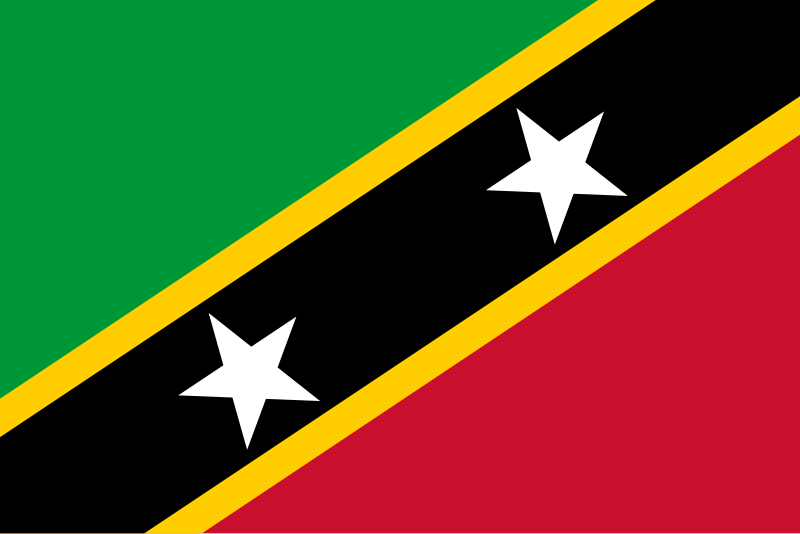





A Nevis gaming license authorizes companies to offer online gambling services to players or to supply gaming software and services to licensed operators worldwide. The governing law is the Nevis Online Gaming Ordinance, 2025, supplemented by the Nevis Online Gaming Regulations (SRO No. 5 of 2025).
NOGA, appointed by the Nevis Island Administration (NIA), maintains a public register of all active licensees at nevisgaming.com. As a FATF-compliant jurisdiction within the Federation of Saint Kitts and Nevis, its AML/CFT standards meet the compliance expectations of banks and payment providers.
How is online gaming in Nevis regulated?
The Nevis Online Gaming Authority (NOGA) is the sole authority responsible for issuing, renewing, and enforcing gaming licenses on the island. NOGA was established and appointed by the Nevis Island Administration (NIA).
It operates under two instruments: the Nevis Online Gaming Ordinance, 2025 (No. 2 of 2025) and the Nevis Online Gaming Regulations (SRO No. 5 of 2025). All active licensees are listed on the public register at nevisgaming.com.
Nevis modeled its licensing regime on the Isle of Man: defined compliance obligations, active supervisory oversight, and a fit and proper standard for all license holders. The jurisdiction is FATF-compliant, meaning its AML/CFT controls align with international financial intelligence standards.
Two distinctions operators should understand before applying:
NOGA vs. FSRC: NOGA is the gaming regulator. The Financial Services Regulatory Commission (FSRC) oversees general financial services on the island. A gaming licensee’s regulator is NOGA, not the FSRC.
Gaming Ordinance vs. Business Corporation Ordinance: The Nevis Online Gaming Ordinance, 2025 governs gaming licenses. The Nevis Business Corporation Ordinance governs IBC incorporation. Both apply to a Nevis-licensed operator, but they are separate laws with separate requirements.
What are the advantages of a Nevis gaming license?
A Nevis gaming license offers zero tax on foreign GGR, covers both B2C and B2B operations under a single license, and can be obtained in 2 to 3 months. NOGA’s FATF-compliant framework supports acceptance by banks and payment providers across multiple markets.
0% Gaming Tax

Zero tax on GGR for foreign income. Full breakdown in the fees and taxes section below.
B2C and B2B Under One License

A single Nevis license covers player-facing operations (casinos, sports betting, poker, lotteries) and B2B services (software, affiliates, PSPs). Operators with both business lines do not need separate applications.
Fast Setup, Predictable Timeline

Company registration in Nevis takes 5 to 7 working days. Full license issuance takes approximately 2 to 3 months from submission of a complete application.
Banking and Payment Acceptance

FATF compliance improves the standing of Nevis-licensed operators with banks and payment service providers compared to non-FATF jurisdictions. MGL can connect you with payment partners who work with Nevis licensees.
Crypto-Friendly Framework
The Nevis Online Gaming Ordinance, 2025 was drafted to cover blockchain-based gaming and digital assets alongside traditional online gambling.
What are the requirements for a Nevis gaming license?
A Nevis gaming license requires personal identity documents from all directors and UBOs, compliance policies prepared before submission, and NOGA’s Fit and Proper due diligence. B2C licensees must additionally appoint a Compliance Officer and a Reporting Officer. MGL prepares most corporate documentation on your behalf.
Personal documents (you provide)
- Passport (certified copy)

- Proof of address (utility bill)
- Bank reference letter
- Professional reference letter (lawyer or accountant)
- Curriculum Vitae (CV)
- Source of funds declaration
- Source of wealth declaration
Corporate and compliance documents (MGL prepares on your behalf)
Completed NOGA application forms;
Company incorporation documents (Certificate of Incorporation, Articles of Incorporation);
Business plan;
Financial statements;
KYC and AML policies;
Responsible gaming policy;
Data protection policy;
RNG certification (required for B2C games of chance);
Game and content provider agreements;
Domain ownership documentation;
Website review and compliance materials;
Organizational chart.
All documents must be certified by a qualified professional: a lawyer, notary, or licensed accountant.
Regulatory requirements
Fit and Proper test: all directors, shareholders, and ultimate beneficial owners (UBOs) must pass NOGA due diligence — financial history, personal background, and integrity.
AML/KYC: documented and operational anti-money-laundering and know-your-customer procedures must be in place before license issuance.
RNG certification: required for B2C operators offering games of chance — a third-party certificate must be submitted with the application.
Responsible gaming: player-protection policies must be documented and implemented.
Data protection: operators must demonstrate compliance with applicable data protection standards.
Compliance Officer and Reporting Officer: both mandatory for B2C licensees. MGL can assist with sourcing an outsourced Compliance Officer.
How it works
How do you get a Nevis gaming license?
Navigating the gaming license process can be complex. Here's a streamlined guide to each step.
Getting a Nevis gaming license involves five steps: registering a Nevis IBC, preparing compliance documentation, submitting the application to NOGA, completing due diligence, and receiving license approval. The process takes approximately 2 to 3 months from submission of a complete application.
What types of Nevis gaming licenses are available?
Under the Nevis Online Gaming Ordinance, 2025, NOGA issues two license types: a B2C license for operators serving players directly, and a B2B license for software and service providers. Both types are available at the same government fee and cover multiple product categories under a single application.
B2C license (player-facing operators)
The B2C license covers operators offering gambling services directly to players: online casinos, sports betting platforms, poker rooms, and online lotteries. One license covers all of these product categories.
B2C applicants must submit: a full business plan, financial statements, proof of source of funds and source of wealth, website review, domain ownership documentation, RNG certificates, and content provider agreements. B2C licensees must appoint a Compliance Officer and a Reporting Officer. Sublicensing is not permitted. Each license includes 2 approved URLs by default.
B2B license (service / software providers)
The B2B license is for companies supplying products or services to licensed operators, not to players directly. Covered activities include gaming software development, affiliate programs, KYC services, payment service providers, and resale intermediaries.
B2B applicants must submit: a business plan, financial documentation, proof of source of funds and source of wealth, domain ownership and website compliance materials, KYC and AML policies, and resale agreements with game or platform providers. Sublicensing is not permitted.
How much does a Nevis gaming license cost?
The initial government fee for a Nevis gaming license is EUR 28,000. This covers the base license for one year, 2 approved URLs, a public registry listing, and an interactive seal.
Additional government fees:
Extra UBO, director, or shareholder: EUR 250 to EUR 500 each;
Additional domain beyond the 2 included: EUR 750 per domain.
Annual renewal fees are charged separately from the initial application fee. Operators with complex ownership structures pay additional due diligence fees at renewal. MGL’s service fee is separate from all government fees. Contact MGL for a full cost breakdown based on your specific structure.
What are the fees and taxes for a Nevis gaming license?
A Nevis gaming license costs EUR 28,000 for the initial year, renewable annually. The full fee schedule and tax treatment are detailed below.
Fees
One-time (initial application):
Base license: EUR 28,000 (includes 2 URLs, public registry listing, interactive seal);
Additional UBO, director, or shareholder: EUR 250 to EUR 500 each;
Additional domain: EUR 750 per domain.
Annual (renewal):
License renewal fee (amount set at renewal; separate from initial fee);
Additional due diligence fees for complex ownership structures (per number of UBOs, directors, shareholders).
Taxes
Nevis IBCs pay no corporate income tax on revenue from non-resident clients:
No tax on GGR (gross gaming revenue) from foreign players;
No capital gains tax;
No inheritance tax.
This tax treatment applies as long as the licensed entity does not offer services to residents of St. Kitts and Nevis.
How do you renew a Nevis gaming license?
A Nevis gaming license is valid for one year from the date of issuance. Renewal applications must be submitted to NOGA more than 30 days before the license expires.
The renewal submission must include:
Completed NOGA renewal form;
Updated compliance documentation;
Audited financial statements;
Disclosure of any material changes to company structure or operations.
NOGA reviews the submission and confirms compliance status. If all criteria are met, the license is renewed for a further year. Failing to submit on time, or failing to meet compliance requirements, may result in the license being suspended or cancelled.
How does the Nevis license compare to Curaçao, Anjouan, and Malta?
Nevis, Anjouan, Curaçao, and Malta differ on timeline, cost, tax treatment, and regulatory profile. Nevis and Anjouan both offer zero GGR tax and remote application under FATF-compliant regimes. Curaçao was substantially reformed in 2024 under a new Gaming Control Board. Malta (MGA) is EU-regulated, with a higher compliance burden and a 12 to 18-month approval timeline.
| Nevis | Anjouan | Curaçao | Malta (MGA) | |
|---|---|---|---|---|
| Regulator | NOGA | ARJEL | GCB | MGA |
| Governing law | Nevis Online Gaming Ordinance, 2025 | Anjouan Gaming Ordinance | National Ordinance on Offshore Games of Hazard (reformed 2024) | Gaming Act, Cap. 583 |
| Timeline | 2–3 months | 5–7 weeks | 4–6 months | 12–18 months |
| Gov. fee | from EUR 28,000/yr | from EUR 17,828/yr | from USD 50,000/yr | from EUR 45,000/yr (depends on type) |
| Tax on GGR | 0% | 0% | 0% | ~5% |
| FATF-compliant | Yes | Yes | Yes | Yes |
| License types | B2C + B2B (one license) | Separate licenses | Separate licenses | Multiple (separate) |
| Remote application | Yes | Yes | Yes | No |
FAQ
Everything you need to know about Our company. Can't find the answer you're looking for? Please chat to our team.
Yes. The licensed company must maintain a registered office in Nevis. You may form a new company there or re-domicile an existing company to Nevis, provided it meets local legal requirements.
From submission of a complete application, license issuance takes approximately 2 to 3 months. Company registration takes 5 to 7 working days.
Operators can serve players worldwide, except in restricted jurisdictions: the USA, UK, France, Germany, Austria, Spain, the Netherlands, Australia, St. Kitts and Nevis, and all FATF blacklisted countries.
The Nevis gaming license, issued by NOGA under the Nevis Online Gaming Ordinance, 2025, authorizes companies to offer gambling services to players (B2C) or to supply gaming software and services to licensed operators (B2B).
Online gambling is legal and regulated in Nevis under the Nevis Online Gaming Ordinance, 2025. Residents of St. Kitts and Nevis are not permitted to use services operated under a Nevis license. Operators must implement geo-blocking to prevent local resident access.
FATF compliance makes the Nevis license a stronger credential with banks and payment service providers compared to non-FATF jurisdictions. Many Nevis-licensed operators work successfully with banking and payment partners. Acceptance depends on each institution’s policies and the operator’s business profile. Contact MGL for introductions to payment partners who work with Nevis licensees.
Operators must block access from the USA, UK, France, Germany, Austria, Spain, the Netherlands, Australia, and St. Kitts and Nevis. FATF blacklisted countries are also restricted. Review your intended player markets against this list before applying.
No. The entire application and licensing process is handled remotely. You do not need to travel to Nevis at any point.
Key differences:
Regime: Nevis operates under the Nevis Online Gaming Ordinance, 2025. Curaçao was substantially reformed in 2024 under a new Gaming Control Board structure.
Timeline: Nevis takes approximately 2 to 3 months. Curaçao now takes 4 to 6 months following the 2024 reforms.
Cost: Curaçao compliance costs increased after the 2024 reform. Nevis government fees start at EUR 28,000.
Tax: Both jurisdictions offer zero or low tax on foreign-sourced gaming revenue.
Reputation: Curaçao has been licensing operators for longer and is more widely recognized by banks and payment providers. Nevis has been issuing licenses since 2025.
Yes. Each license includes 2 approved URLs by default. Additional domains can be added at EUR 750 per domain.
If a renewal application is not submitted more than 30 days before expiry, or if NOGA determines compliance requirements are not met, the license may be suspended or cancelled. Operating under a suspended license is a regulatory violation.
Navigating the gaming license process can be complex. Here's a streamlined guide to each step